
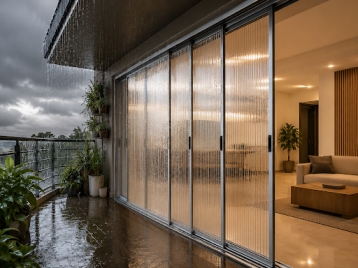
During the monsoon, constant rain and humidity can put conventional doors through their toughest test—causing moisture damage, swelling, rust, mould, and even water seepage.
Polycarbonate-acrylic sliding doors are better suited to these conditions, offering moisture resistance, durability and plenty of natural light without compromising on a clean, modern look.
Their smooth sliding operation also saves space, creating a practical barrier between indoor and outdoor areas for homes and commercial spaces.
What Makes Monsoon Season Tough on Regular Doors?
Heavy rain and persistent humidity can affect conventional doors in several ways, especially when materials and frames are repeatedly exposed to moisture.
- Wooden doors can absorb moisture, leading to swelling, warping, and surface damage.
- Metal components may develop rust or corrosion when protective finishes deteriorate.
- Damp areas around frames can encourage mould and mildew growth.
- Poorly sealed frames may allow rainwater leakage into balconies and interiors.
- Repeated expansion and contraction can affect how smoothly doors open and close.
- High humidity can also increase maintenance requirements during and after the rainy season.
For balconies, verandas, and other exposed areas, using polycarbonate-acrylic sliding doors can help create a more practical barrier during the rainy season and changing weather conditions.
What Are Polycarbonate Acrylic Sliding Doors?
They are modern, lightweight, impact-resistant entryway systems featuring transparent or hybrid panels in aluminium or steel frames.
These functional doors slide or fold compactly, helping maximise natural light while saving space. Their durable construction makes them suitable for homes, offices, commercial spaces, balconies, and other areas requiring practical separation.
What Is It Made Of?
The door combines two complementary materials, each selected for a specific performance benefit. Polycarbonate provides structural strength and impact resistance, while acrylic contributes visual clarity and a smooth surface finish.
The Main Panel Materials
- Impact-resistant sheet: A tough plastic material that can withstand strong impacts without shattering easily.
- Clear transparent sheet: A smooth, glossy material that offers glass-like clarity while providing good resistance to everyday scratches.
The Frame and Hardware
- Aluminium alloy: Forms the outer frame, keeping the door rigid, lightweight, and rust-resistant.
- Rollers and pulleys: Smooth wheels inside the frame let the door slide quietly and easily.
- Seals and magnets: Rubber or magnetic strips along the edges help block drafts and improve insulation.
Why Are Polycarbonate Acrylic Sliding Doors Ideal for Monsoon?
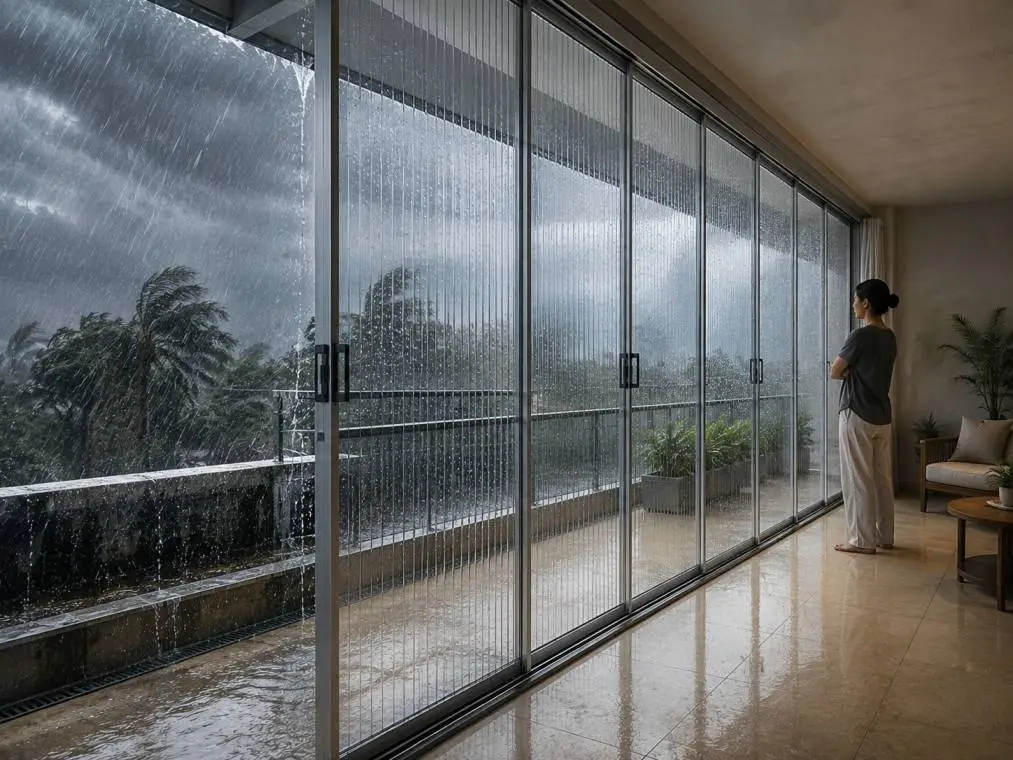
Designed for demanding monsoon conditions, these sliding enclosures create a waterproof, wind-resistant barrier that helps keep outdoor spaces dry and comfortable. They can complement a balcony rain guard, while lightweight, shatterproof, transparent panels block harsh weather without restricting natural light.
| Feature | Benefit |
| Rain and Wind Block | Airtight rubber seals and multi-lock systems stop heavy sideways rain, strong gusts, and chilly drafts from entering your living space. |
| High Impact Strength | Polycarbonate is up to 250 times stronger than glass, meaning it will not shatter or crack under violent storm winds or flying debris. |
| Rust-Free Profiles | Paired with powder-coated aluminium or stainless-steel tracks, the structure resists continuous moisture without rusting or corroding. |
| Pest and Puddle Prevention | Closing the panels keeps out moisture, dirt, pollution, and stray birds that try to nest during heavy rains. |
| Uninterrupted Lighting | Unlike opaque shutters or heavy curtains, crystal-clear panels keep your rooms bright and airy, not dark and gloomy. |
| Space Saving | Smooth sliding or pleated mechanisms stack neatly to the side, giving you total control over when to open or seal your balcony. |
How Do They Resist Water Damage?
Proper installation and sealing help protect against moisture exposure, making them suitable as waterproof sliding doors for balcony applications.
- Helps limit water exposure
- Sealed installation reduces leakage
- Suitable for rainy conditions
- Protects enclosed balcony spaces
Are They Impact and Weather Resistant?
Yes, they offer high impact resistance, and the combined construction is designed to withstand demanding outdoor weather conditions.
- Handles everyday impact better
- Suitable for exposed spaces
- Resists demanding weather conditions
- Supports long-term outdoor use
Do They Prevent Mould and Mildew Growth?
Yes. The door materials themselves do not provide a food source for mould, but proper sealing, drainage, cleaning, and ventilation remain important during humid monsoon conditions.
- Keep tracks clean
- Remove standing water
- Check seals regularly
- Maintain proper ventilation
How Clear and UV-Resistant Are They?
88%–93% with strong UV resistance when protected with suitable coatings.
- Allows natural light inside
- Maintains outdoor visibility
- Supports UV resistance
- Suitable for bright balconies
What Makes This Combination Better Than Using Either Material Alone?
Combining polycarbonate with acrylic brings together the strengths of both materials in one engineered door. Instead of choosing between toughness and clarity, the construction balances structural performance with a clearer, finished surface.
Polycarbonate vs Acrylic Doors Comparison (Quick View)
| Property | Polycarbonate Layer Contributes | Acrylic Layer Contributes | Net Benefit |
| Strength | Impact resistance | Surface finish | Stronger door system |
| Clarity | Structural support | Visual clarity | Better visibility |
| Weather exposure | Durable structure | Weather-facing finish | Outdoor suitability |
| UV exposure | Protective performance | UV/weather-facing surface | Better longevity |
…………………………………………………………………………………………………
What Other Benefits Do These Doors Offer Beyond Monsoon?
Beyond monsoon protection, the same construction can support quieter interiors, energy-conscious use, and good natural-light transmission.
Do They Help With Noise Reduction?
Yes. The door construction reduces outdoor noise compared with more open balcony arrangements.
- Helps reduce outside noise
- Creates a more enclosed space
- Supports quieter indoor areas
Are They Energy Efficient?
Yes. By enclosing exposed areas while letting daylight in, these doors can create more comfortable indoor spaces and reduce reliance on artificial lighting.
- Allows daylight into rooms
- Helps enclose open balconies
- Supports comfortable indoor spaces
How Much Natural Light Do They Allow?
Their clear construction lets substantial daylight pass through, helping enclosed balconies and adjoining rooms stay bright.
- Maintains outdoor visibility
- Allows natural daylight
- Keeps spaces visually open
How Do You Maintain Polycarbonate Acrylic Sliding Doors During Monsoon?
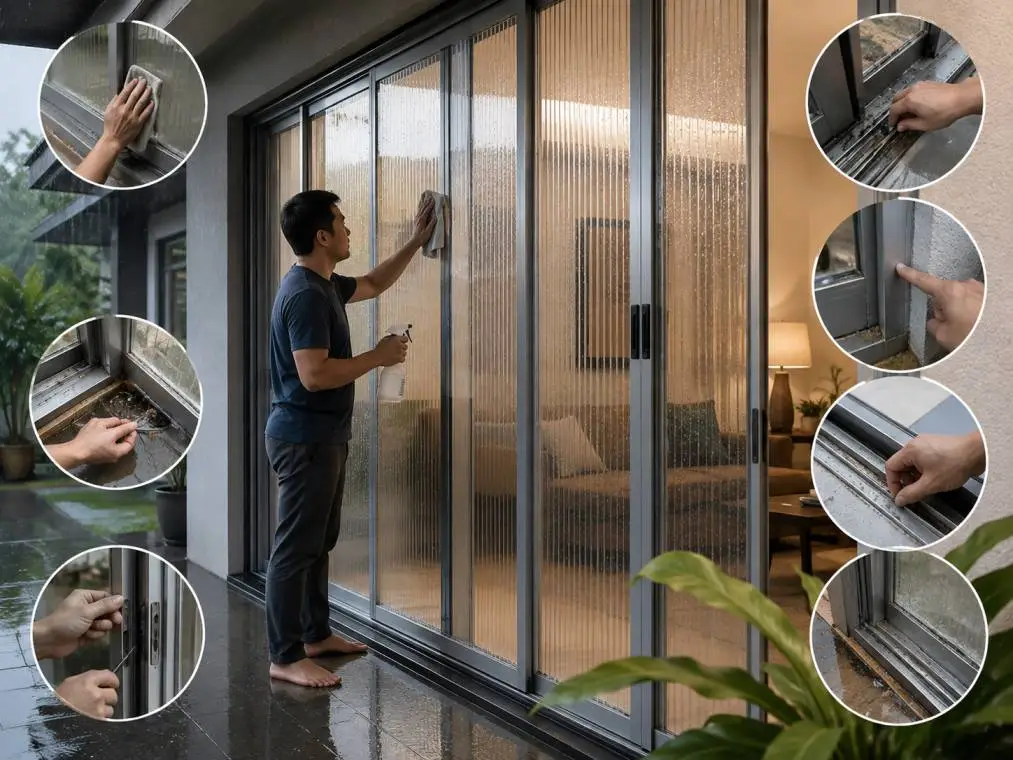
Regular cleaning, track maintenance, and sealant checks help keep the doors functioning smoothly during prolonged rain and humidity.
- Clean panels regularly
- Remove dirt from tracks
- Check sealants for damage
- Keep sliding tracks clear
- Inspect drainage points
- Check hardware after heavy rain
How Much Do Polycarbonate Acrylic Sliding Doors Cost in India?
Typically, costs range from ₹400–₹900 per sq. ft. for basic materials and fabrication, while complete custom or heavy-duty folding/sliding systems can cost more depending on size and framing.
What Factors Affect the Price?
- Material Type: Pure solid or multiwall polycarbonate costs more than standard acrylic.
- Panel Thickness: Thicker 4mm–10mm+ sheets increase material costs.
- Frame Material: Aluminium, steel, or uPVC affects structural costs.
- Panel Finish: Clear, frosted, tinted, textured, or UV-coated options vary in price.
- Hardware & Mechanism: Soft-close tracks and heavy-duty rollers cost more.
- Size & Customisation: Larger panels and complex sliding configurations increase costs.
Which Homes and Spaces Benefit Most from These Doors?
Homes and commercial spaces with exposed balconies, terraces, verandas, or large openings benefit most from these doors because they provide shatter-resistant protection, weather resistance, natural light, and efficient use of space.
- Invisible grills for balconies needing rain protection
- Open verandas requiring enclosure
- Terraces exposed to monsoon
- Shops needing weather protection
- Showrooms requiring natural light
- Sliding mosquito nets for large windows for insect protection
Your Takeaway— Is a Polycarbonate Acrylic Sliding Door Right for You?
It is right for you if you want a lightweight, shatter-resistant barrier that helps block heavy rain, wind, dust, and birds while keeping views clear. It is particularly suitable for balconies and patios, although the surface may scratch over time.
This is where a quality partner matters. Our team in Kolkata can help you select the right polycarbonate acrylic sliding doors for monsoon season.
Contact us today for an installation enquiry.
People Also Ask
Is a Polycarbonate Acrylic Sliding Door the same as a regular polycarbonate door?
No. It combines impact resistance with clarity and a weather-resistant finish, while the regular version uses a single material throughout.
Can I get just acrylic or just polycarbonate panels instead?
Yes. Both are available as standalone sheets, but suitability depends on door design, thickness, framing, outdoor exposure, and required impact resistance.
Are polycarbonate doors waterproof?
They are water-resistant, but not automatically waterproof. Proper sealing, compatible framing, drainage, installation, and track design determine weather protection.
Which is better, polycarbonate or acrylic, for outdoor use?
Both can suit outdoor applications. One offers greater impact resistance, while the other provides excellent optical clarity and weather resistance. The better choice depends on the application.
Do polycarbonate doors turn yellow over time?
Yes, with prolonged UV exposure without adequate protection. UV-protected sheets help reduce yellowing and weather-related degradation.
How long do polycarbonate sliding doors last?
Typically, they last 10 to 20 years outdoors, while high-quality panels with proper maintenance can last up to 25 years.
Can acrylic doors crack in heavy rain or hail?
Yes, they can crack under heavy hail. However, heavy rain alone generally will not cause cracking.
Are polycarbonate doors safe from termites and pests?
Yes, they are completely safe from termites and other pests. However, overall protection depends on the frame, seals, tracks, and installation.
What is the difference between polycarbonate and glass sliding doors?
Polycarbonate is lighter and more impact-resistant than glass, while glass generally offers better scratch resistance and a more conventional rigid finish. The choice depends on application requirements.
Do these doors need special maintenance after the monsoon?
Yes. Clean the panels and tracks, remove debris, inspect seals and drainage points, and check the hardware after heavy rainfall.
Is polycarbonate more expensive than glass or UPVC?
Not necessarily. Pricing depends on thickness, dimensions, configuration, hardware, framing, installation, and product grade.
Can polycarbonate sliding doors be installed on existing balconies?
Yes, potentially. Suitability depends on structural support, opening dimensions, drainage, track installation, and fixing points. A site assessment can confirm feasibility