
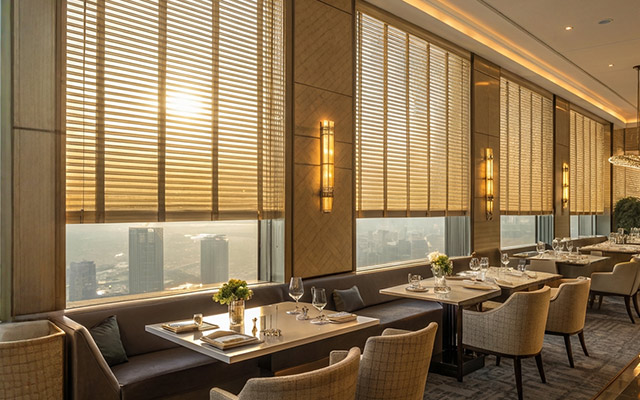
Small rooms often feel tighter than they actually are, and the reason is rarely just the furniture. It can be due to the curtains. Heavy curtains tend to block light and visually weigh down walls, making compact rooms feel closed in.
Trim Designer focuses on window solutions that balance functionality with openness. In compact apartments, well-planned window blinds have become a practical choice for creating brighter, more spacious interiors without structural changes.
This blog explains why curtains often shrink visual space in small rooms and how the right blinds can instantly create a feeling of openness, light, and balance.
The Hidden Way Curtains Reduce Space in Small Rooms
Even unfurnished small rooms feel uncomfortable. Visual space depends on light and continuity, not just size. Poor window treatments take away depth and proportion.
Limited daylight and heavy window coverings make walls appear closer, and ceilings feel lower. Addressing window treatments early improves the overall sense of space.
How natural light shapes room perception
Natural light quietly changes how a room feels the moment you step in. Spaces with good daylight look bigger, calmer, and more welcoming, while colours appear authentic and textures feel more alive, no extra décor required.
- Bright rooms appear larger.
- Shadows reduce spatial depth.
- Natural light softens room boundaries.
- Blocking light restricts how far the eye can travel.
Why window treatments influence space
Window treatments decide how open or boxed-in a room feels. The right fabric and fit can let light flow freely, making the space feel airy and balanced, while heavy or poorly chosen fabrics can visually shrink the room.
- Clean window lines extend wall continuity.
- Covered windows interrupt visual flow.
- Simple treatments preserve openness.
The Real Problem With Curtains in Small Rooms
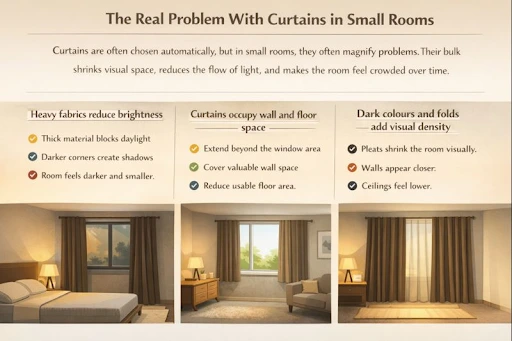
People often choose curtains by habit. Curtains suit large rooms, but they overwhelm small ones. Their bulk and folds reduce both brightness and space. Over time, curtains make small rooms feel more enclosed.
Heavy fabrics reduce brightness
Thick, layered fabrics block natural light even during the day, making the room feel dim and closed in. Less light means walls look closer and the space feels smaller than it actually is.
- Reduced daylight penetration
- Darker room corners
- Less visual openness
Curtains occupy wall and floor space
Long, bulky curtains visually eat into both wall height and floor area. When too much fabric gathers at the sides or pools on the floor, it breaks the clean lines that make a room feel open.
- Walls appear shorter
- Windows feel smaller
- Floor space looks crowded.
Dark colours and folds add visual density
Dark shades and deep folds absorb light, adding visual weight. Instead of letting the room breathe, they create a heavier look that makes the space feel crowded and less airy.
- Walls feel closer
- Ceilings feel lower
- Room proportions suffer
Why Blinds Work Better Than Curtains in Compact Spaces
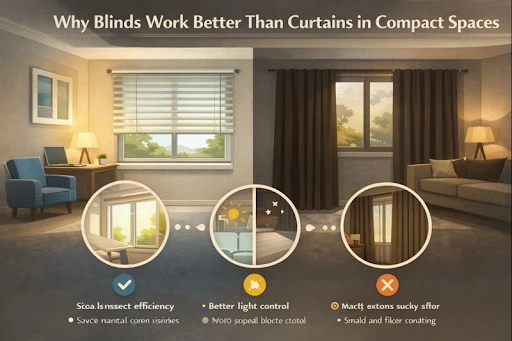
Blinds are efficient and well-proportioned. They fit into window frames and avoid visual bulk, making them suitable for small rooms and modern apartments.
Their streamlined design supports both light and space.
Blinds stay close to the window
Blinds sit neatly against the window, not floating into the room. This keeps walls looking uninterrupted, shows more visible surface area, and avoids the fabric bulk that makes rooms feel crowded. The result is a cleaner, more open look without trying too hard.
- No excess fabric
- More visible wall area
- Cleaner room lines
Clean lines reduce clutter
Straight lines and simple structures give the eye fewer things to process. With less visual noise, the room instantly feels organised, balanced, and more spacious.
- Less visual distraction
- Better symmetry
- Contemporary appearance
Adjustable light without heaviness
Blinds let daylight in without overwhelming the space or blocking it out completely. Light stays soft and controlled, privacy remains intact, and the room feels comfortable instead of visually overloaded.
- Daylight remains present
- Privacy stays intact
- No visual overload
Blinds That Instantly Make a Small Room Look Bigger
Certain blind styles are ideal for compact interiors. Their structure keeps spaces open rather than closed. The right type enhances both looks and function.
Roller blinds for minimal interiors
Roller blinds disappear neatly when rolled up, leaving the window clean and uncluttered. With no folds or extra layers, the space feels lighter and more modern, perfect for living rooms and bedrooms that follow a simple, minimal vibe.
- No folds or layers
- Clear window area
- Clean, modern finish
Zebra blinds for flexible light control
Zebra blinds shift between light and shade without closing the room off. They let you adjust the brightness while keeping the space open, creating a soft, balanced transition that works well in rooms that need controlled daylight.
- Adjustable brightness
- Maintained openness
- Soft visual transition
Vertical blinds that enhance height
Vertical lines naturally pull the eye upward, making ceilings look taller, and rooms feel longer. This visual trick improves proportion, especially in narrow spaces or rooms with tall windows, without changing the layout.
- Ceilings appear taller
- Rooms feel elongated
- Better visual proportion
How Blinds Create the Illusion of Space Without Renovation
Visual design often outweighs physical changes. Blinds reshape perception through light and alignment, without altering the room’s structure.
This makes them a cost-effective improvement.
Light expands visual boundaries
- Reduced shadows
- Enhanced depth
- Improved ambience
Clean window lines maintain continuity
- No interruptions
- Extended wall perception
- Balanced layout
Vertical alignment improves proportions
- Ceilings feel higher
- Walls feel extended
- The room feels balanced.
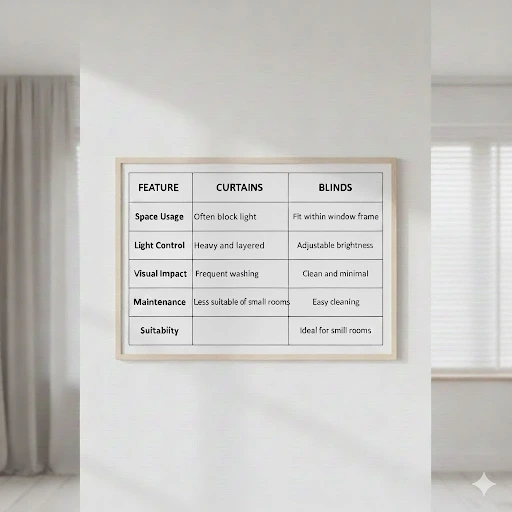
Curtains vs Blinds for Small Rooms
Choosing the Right Blinds for Small Rooms and Apartments
Choose blinds that keep the space-enhancing effect. Match them to room size, light direction, and how you use the room every day. Thoughtful selection avoids visual crowding.
Let’s know what happens if we choose the right blinds:
- Light colours reflect openness
- Better light reflection
- Reduced heaviness
- Fresher appearance
- Slim designs prevent crowding
- Minimal hardware
- Neat window finish
- Clear sightlines
- Easy operation keeps windows neat
- No tangled cords
- Consistent appearance
- Long-term convenience
For top-quality window blinds in Kolkata, trust Trim Designer for a wide range of stylish, functional, and space-enhancing blinds tailored for your needs.
Common Mistakes While Selecting Blinds
Mistakes during selection can reduce the benefits of blinds. Awareness helps prevent poor outcomes.
Choosing heavy textures
Thick, textured materials trap light, making the room feel closed off. Lighter fabrics let daylight flow freely, keeping the space feeling open and breathable.
- Less light flow
- Increased visual density
- Enclosed feeling
Installing blinds too low
Low placement visually cuts the wall height and makes ceilings feel shorter. Installing blinds closer to the ceiling improves proportions and instantly creates a taller, more balanced look.
- Reduced ceiling height
- Poor visual balance
- Crowded appearance
Ignoring room orientation
The direction a room faces changes how light behaves throughout the day. Darker rooms need lighter blinds to reflect daylight, while brighter rooms benefit from soft filtering—balance is what keeps the space comfortable.
- Dark rooms need lighter blinds
- Bright rooms need filtered light
Creating Space Without Changing the Room
Small rooms benefit more from smart design than from big changes. Window treatments affect how you see space. Curtains add weight and dim rooms; blinds let in light and maintain openness.
Key benefits of switching to blinds include:
- Improved natural light distribution
- Cleaner window and wall lines
- Better sense of height and space
Looking to upgrade your space? Window blinds in Kolkata from Trim Designer help small rooms feel brighter, lighter, and more comfortable.
Call +91 90513 93672 or +91 90386 98927 today for more information.
People Also Ask (FAQs)
- Do curtains make small rooms look smaller?
Curtains can reduce perceived space when heavy fabrics block light and add visual bulk.
- What type of blinds are best for small rooms?
Roller blinds, zebra blinds, and vertical blinds work best for compact interiors.
- Are blinds better than curtains for apartments?
Blinds suit apartments better due to their minimalist design and space-saving features.
- How do blinds make a room look bigger?
Blinds maintain clean lines, allow light flow, and avoid heavy layering.
- Which blind colours suit small rooms?
Light shades such as white, beige, and soft grey enhance a sense of spaciousness.